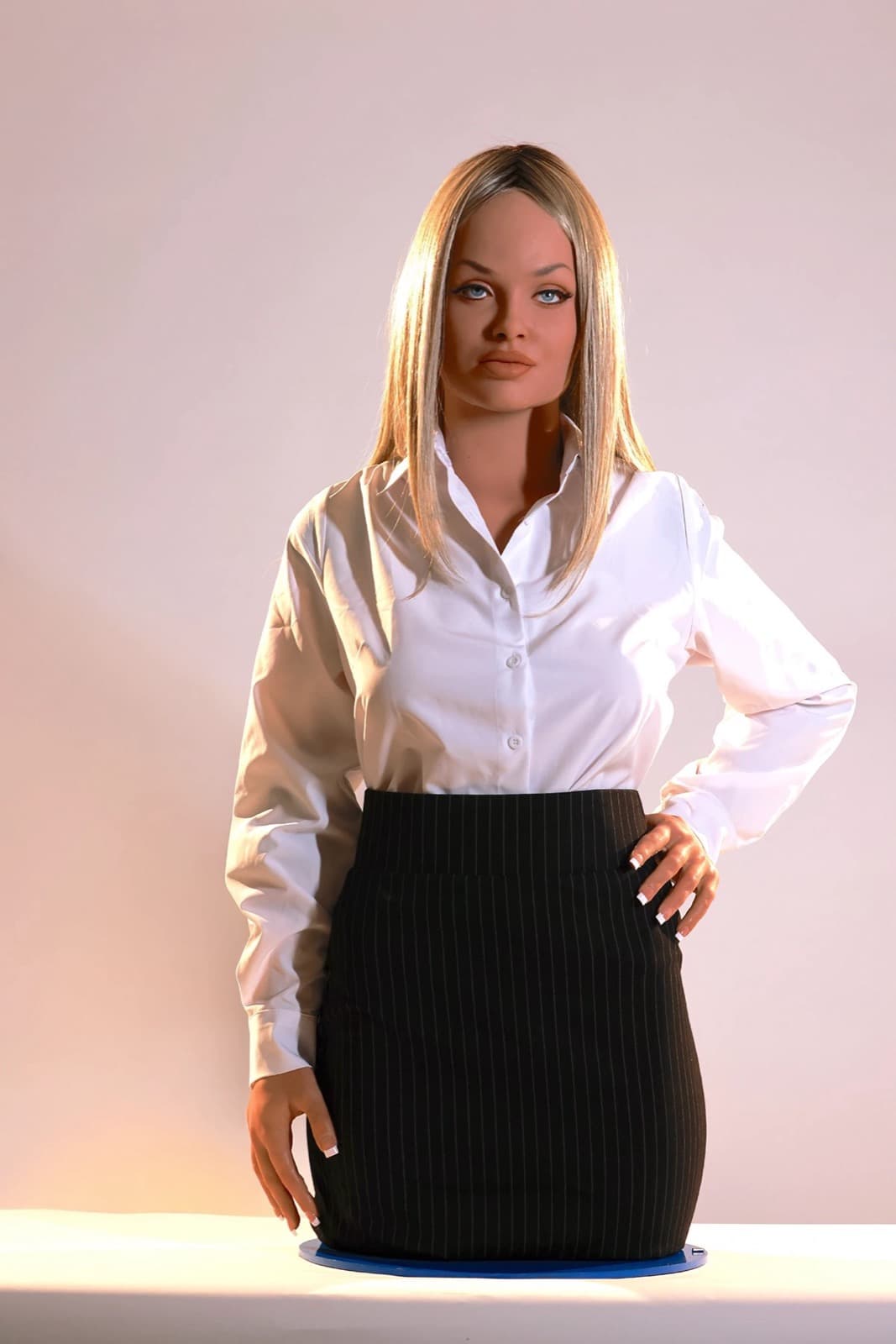
No company has been chasing this dream longer. Realbotix grew out of Abyss Creations, the studio that has hand-built hyper-realistic silicone humans under the RealDoll name since the 1990s. Its founder, Matt McMullen, spent two decades perfecting the body; Realbotix is the project to give that body a mind and a face that moves. In 2024 it became a public company the unglamorous way — a reverse-takeover of Andrew Kiguel's listed Tokens.com shell — and now trades on the TSX Venture exchange as a micro-cap, with Kiguel as CEO and McMullen shifted to chief creative officer.
The bet: craft over scale
Where every other name in this directory races toward legs, labour, or mass manufacturing, Realbotix is betting on the opposite: silicone craft and emotional presence. Its flagship Aria and travel-friendly Melody are conversational, endlessly customisable, expressive from the chest up — and unmistakably luxury objects, launched north of six figures. They do not walk; they sit or ride a wheeled base, expressive above the waist and static below. This is the only true companion-robot pure-play you can actually buy today — and lately the company has begun repositioning that same lifelike-interface technology as "embodied AI" for enterprise (telecom, healthcare, hospitality), not just the bedroom.
Where it stands
Two things keep the story honest. The robots are expensive and the volumes are tiny: Realbotix's revenue ran well under a million dollars in the first half of fiscal 2026 and is actually declining — down roughly 63% year on year — as it deliberately winds down legacy crypto-staking income to concentrate on robots, with only a handful of units shipped. (Its first genuine commercial deployment, a Vinci-vision robot delivered to Ericsson, came in April 2026.) And the hardest problem — a face convincing in motion rather than in a photo — is one even the category's most experienced maker hasn't fully solved.
But if anyone has earned the right to try, it's the people who have been building artificial people the longest. The 2024 stunt of naming its own AI robot, Aria, a non-executive board advisor was pure marketing; the twenty years of silicone craft behind her are not.