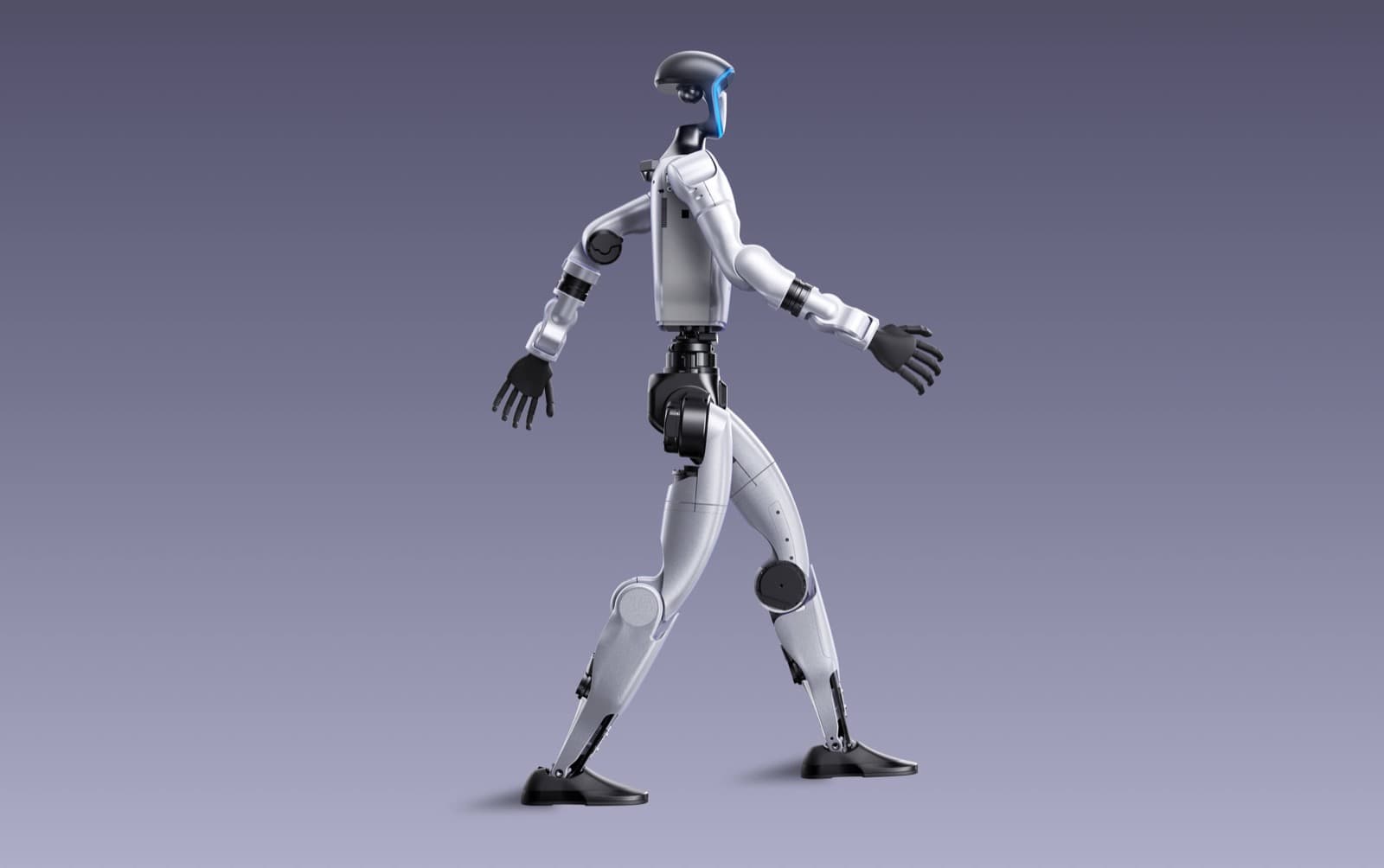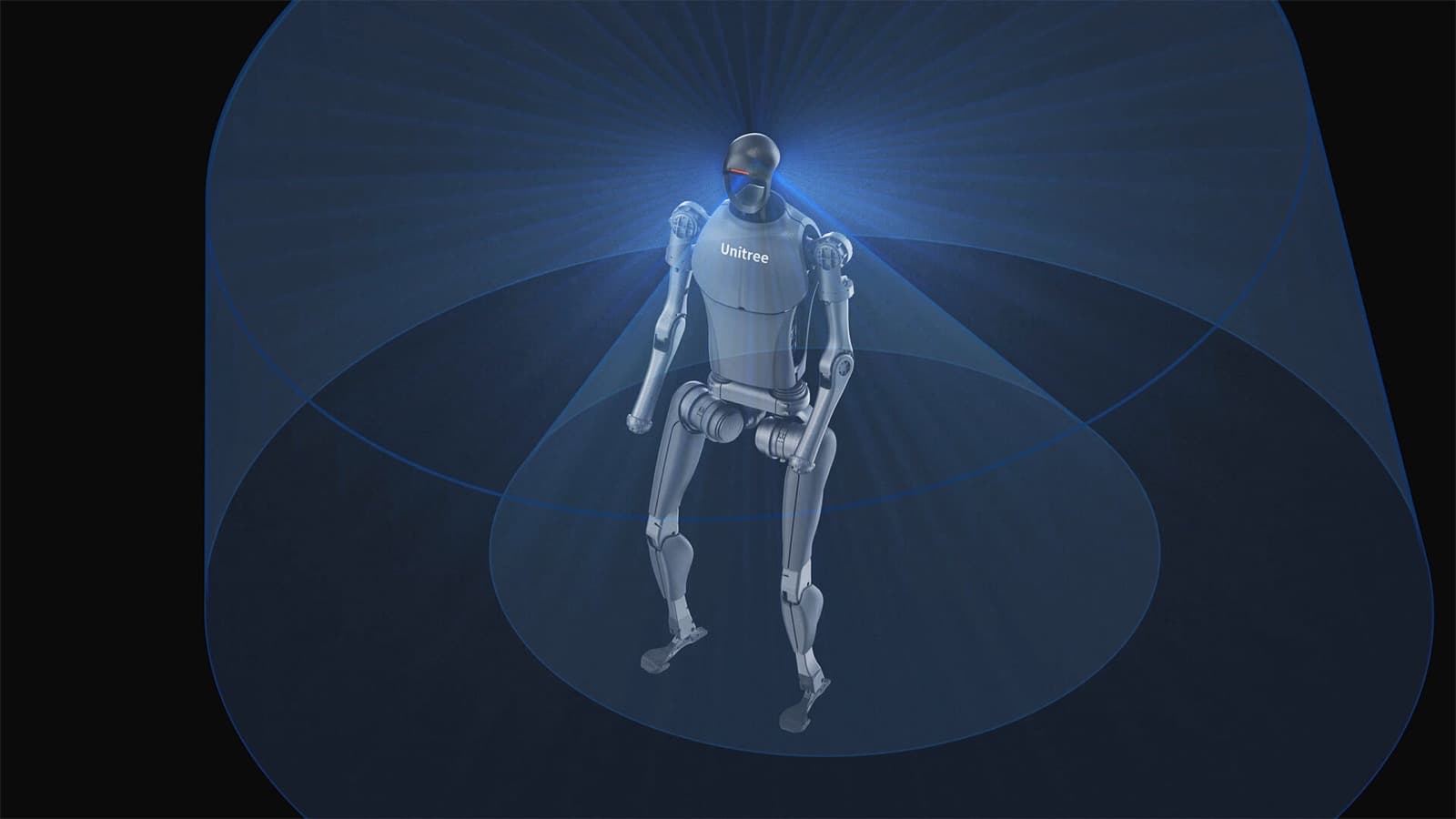
Founded in 2016 by Wang Xingxing — who built his first quadruped as a graduate student — Unitree has become one of the two highest-volume humanoid makers on earth, and the one that broke the price floor. While Western rivals quote six figures or "contact sales," Unitree sells a walking humanoid, the G1 (132 cm, about 35 kg), from $13,500 on its own site, down from about $16,000 at launch: the price of a modest car, not a house.
The bet: win on price and volume
Its strategy is ruthlessly vertical: it designs and builds its own actuators, motors, harmonic drives and LiDAR, sells into a deep research-and-developer ecosystem, and iterates in public with viral demos — sixteen of its H1 robots dancing on China's 2025 Spring Festival Gala, a humanoid kickboxing tournament, gold medals at the 2025 World Humanoid Robot Games. The trade-off is honesty about purpose: these are research and embodied-AI platforms, not companions. There's no synthetic face, no warmth, no pretense of a relationship — and the demos lean on teleoperation and choreography rather more than the clips let on.
Where it stands
Unitree is the rare humanoid maker that actually makes money. Its IPO prospectus reported 2025 revenue around $257M (up more than 300% year on year) and a real profit, making it, by its own account, the only profitable humanoid company in the world, having shipped roughly 5,500 humanoids that year. On August 19, 2026 it listed on Shanghai's STAR Market at ¥150.80 a share, a price that valued it near ¥61 billion (about $9 billion). That made it the first humanoid-robot company listed in mainland China; UBTech, the earlier pioneer, has traded in Hong Kong since December 2023. The shares closed up about 460% on the first day, then fell roughly 45% from their intraday peak within a week. Its first quarterly report as a listed company, on October 28, showed nine-month revenue of ¥1.82 billion, up about 56%, and attributable net profit of ¥387 million, though profit excluding one-off items fell about 19%.
The volume lead it claims is now contested. Research firm Smart Analytics Global put AgiBot ahead in the first half of 2026, at about 8,400 humanoid shipments to Unitree's 5,900, as reported by the South China Morning Post. Unitree's 2026 shipment target of 20,000 units is a company claim; the audited financials underneath are not.
US sales carry a new limit. Since July 28, 2026 the FCC's Covered List has included foreign-produced humanoid and quadruped robots, so new models made outside the US can't get the equipment authorization needed for US import or sale unless the Department of War grants a conditional approval. Unitree said on July 31 that its main models already authorized before the change, including the G1, H2 and R1 humanoids, can still be sold in the US, while future models face that barrier.
Unitree matters to this site as the cost-curve setter. When the cheapest credible humanoid body comes from Hangzhou at a five-figure price — built on actuators a companion maker would otherwise have to buy or invent — every rival's bill of materials is measured against it. The face and the warmth are someone else's problem to add; Unitree's job is to make the body cheap, and at that it is winning.